Nic salts or freebase: how the two forms differ
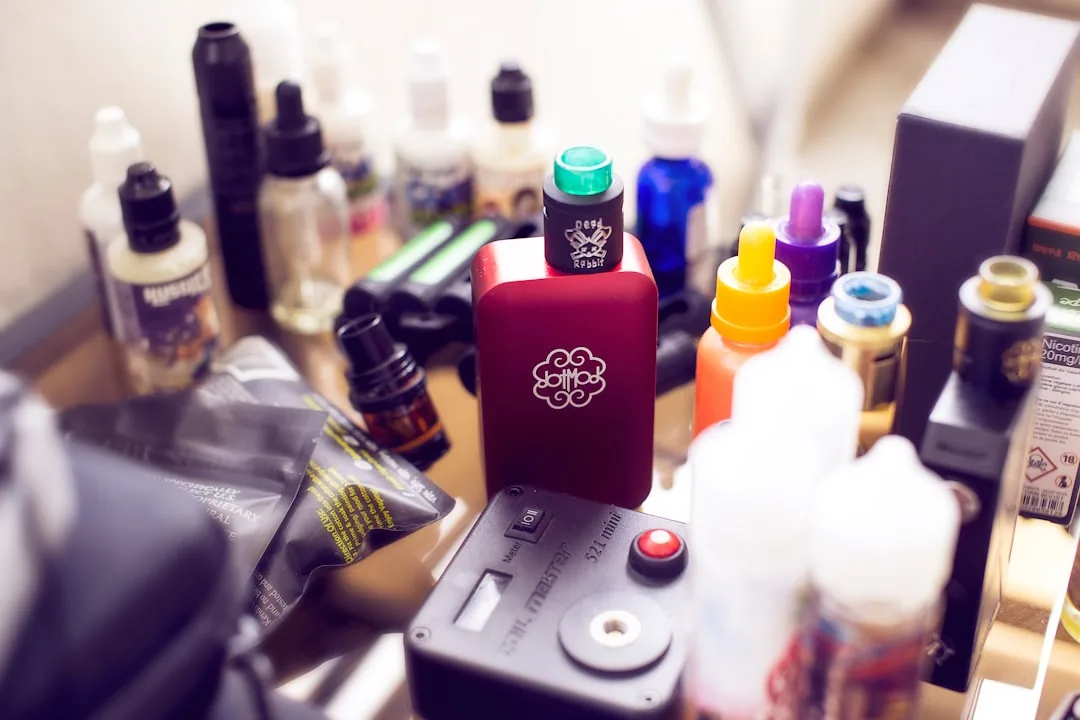
Two bottles on the same shelf, the same figure printed on both, and two completely different sensations in the throat. The only thing separating them is a word on the label: nic salts, or nothing at all, which means freebase.
British shops now stock both forms in almost every flavour, and the shelf gives no clue as to which one belongs in the device in your pocket. Getting that pairing wrong is the most common reason a newcomer concludes that a perfectly ordinary bottle is unusable. This note sets out what the two forms are, what genuinely differs between them, and how the choice is actually made.
What nic salts are, chemically
Both forms contain the same molecule. Freebase is nicotine in its unmodified state, the form that has been in e-liquid since the beginning and still fills most of the market by volume.
Nic salts are that same nicotine combined with an acid, most commonly benzoic acid. The acid lowers the pH of the liquid, and that single change is the whole of the difference.
Lower pH means the nicotine passes the throat more gently. A freebase liquid at a given concentration announces itself sharply on the way down, while a salt liquid at the identical concentration goes almost unremarked.
Nothing has been added or removed in terms of quantity. The label figure means exactly what it means in both cases, and our note on reading nicotine strength on the bottle applies unchanged to either.
What actually changes, and what does not
Three things genuinely differ between the forms, and it is worth being precise about them because a great deal of shop copy is not.
Throat sensation is the first and the most obvious. The acidified form is smoother at any given figure, which is why the upper part of the British scale is dominated by salts and the lower part by freebase.
Delivery speed is the second. The salt form is generally described as reaching the bloodstream more quickly, so the sensation of having had something arrives sooner after a few puffs rather than gradually across a session.
Stability is the third and least discussed. Freebase oxidises somewhat faster, which is why an older bottle can darken towards yellow or brown and taste flatter, while salt liquids tend to hold their colour longer.
What does not change is the quantity of nicotine, the legal cap, or the flavour compounds themselves. A liquid does not become weaker or stronger by being one form rather than the other.
Why freebase still holds most of the market
The impression left by British retail displays, where bar-style salt liquids occupy the front, is that freebase is on the way out. That is a shelf effect rather than a market one.
Freebase produces a defined throat hit that a large number of long-term vapers actively want, and which the salt form deliberately removes. Taking it out is not universally an improvement.
It is also the only form that works properly across the whole range of bases. High vegetable glycerine liquids built for airy, high vapour devices are freebase almost without exception, and so are the nicotine shots sold for mixing into shortfills.
That last point matters more than it sounds. Britain’s shortfill system, where a large nicotine-free bottle is topped up with a small shot, runs on freebase shots, so anyone mixing their own liquid is working in that form by default.
Pairing nic salts or freebase with the device
This is where the decision is actually made, and it is a question of hardware rather than taste. The form follows the device, not the other way round.
| Device family | Draw | Vapour volume | Form commonly sold for it |
|---|---|---|---|
| Compact pod, high resistance coil | Tight, mouth to lung | Low | Nic salts |
| Refillable pen or small tank | Tight to restricted | Low to moderate | Either form |
| Restricted direct to lung tank | Restricted | Moderate | Freebase |
| Sub-ohm tank, higher power | Airy, direct to lung | High | Freebase |
The logic behind the table is straightforward. A device producing very little vapour concentrates whatever it carries, so the smoothing effect of nic salts is what makes the upper part of the scale usable there at all. A device producing a great deal of vapour spreads the same concentration thinly and does not need that smoothing, which is why freebase dominates the airy end.
The reverse pairings are the ones that go wrong. A salt liquid at a high figure in a high power device delivers far more per puff than the label suggests, and a freebase liquid at a high figure in a tight pod is simply unpleasant. Our note on nicotine strength and your device works through that relationship in detail.
The same legal ceiling for both
One point settles a persistent misunderstanding. British rules make no distinction whatsoever between the two forms.
Nicotine-containing e-liquid is capped at 20 mg/ml whether it is a salt or a freebase, bottles containing nicotine are capped at 10 ml in both cases, tanks and pods are capped at 2 ml, and sales are restricted to adults of 18 and over.
Choosing nic salts therefore does not open a door to anything above that ceiling. What it changes is how a given point on the scale is experienced, not how far up the scale a product is allowed to go.
The base of the liquid adds a further layer to that experience, since the ratio of propylene glycol to vegetable glycerine also moves the throat sensation at an unchanged figure, as our note on the PG/VG ratio and nicotine sets out.
Reading the label to tell them apart
Identifying which form is in front of you takes a second, once you know what the wording looks like.
Salt liquids say so, usually as nic salt, nicotine salt or salt nicotine, often as part of the range name rather than in the small print. Bar-style ranges built to imitate disposable flavours are salts almost without exception.
An absence of any such wording means freebase. There is no positive marking for it, which trips people up, and the same is true of nicotine shots unless they state otherwise.
Where a range exists in both forms, the bottles are frequently near-identical apart from a single word, so it is worth reading before mixing anything into a shortfill.
Frequently asked questions
Do nic salts contain more nicotine than freebase?
No. At an identical label figure, the quantity of nicotine per millilitre is the same, and the same 20 mg/ml British cap applies to both. What differs is the throat sensation at that figure, which is why the upper part of the scale is more commonly sold in salt form.
Can nic salts be used in any device?
They are formulated for low power, tight draw devices where vapour output is small. In a high power device producing large clouds, a salt liquid from the upper part of the scale delivers far more per puff than its label suggests, which is why the two are not interchangeable.
Do the two forms taste different?
The flavour compounds are unrelated to the form, so the aroma itself is broadly unchanged. The perceived difference comes from throat sensation: a sharper hit crowds out finer notes, so the same flavour can read as more or less detailed depending on the form carrying it.
How do I tell which form a bottle is?
Salt liquids state it on the label, usually as nic salt or nicotine salt, often in the range name. If there is no such wording, the liquid is freebase, since that form carries no positive marking of its own.
Can a salt liquid and a freebase liquid be mixed?
Technically yes between liquids of the same base ratio, but the result is unpredictable in the one respect that matters, namely throat feel, since the pH of the mixture sits somewhere unstated between the two. Matching the form to the device is a more reliable approach than blending.
Choosing the form the device asks for
The question of nic salts or freebase is not a question of which is better, because they answer different hardware. The acidified form makes the upper part of the British scale comfortable in devices that produce very little vapour. The unmodified form keeps the throat hit and remains the only practical option across high vapour bases and shortfill mixing.
Start from the device rather than from the shelf. Note what draw it produces and how much vapour it makes, then let that decide the form, and only then look at the figure on the label.
Read in that order, nic salts stop being a stronger option or a milder one and become what they actually are: a different carrier for the same substance, suited to a particular kind of kit. Getting that order right, bottle after bottle, is what makes the rest of this notebook legible.
Editorial content for adult readers only. Nicotine is a highly addictive substance. Not for sale to anyone under 18 in the United Kingdom. Nothing here is a purchasing recommendation or a recommended nicotine strength.
Dragon fruit e-liquid, the format, strength and ratio to pick
Dragon fruit e-liquid as a 10 ml nicotine bottle or a shortfill. The real strength after mixing, the PG/VG ratio and the iced version, worked out.
Lire la note
Armour G, choosing the coil and the nicotine strength
Armour G by Vaporesso, MTL or DTL pod, GTX coils from 0.15 to 1.2 ohm. The nicotine strength and PG/VG ratio that suit each coil, set out clearly.
Lire la note
Nic salt shot, choosing one and getting the strength right
A nic salt shot carries 200 mg of nicotine. The maths for any target strength, the PG/VG shift in the bottle and careful handling, worked through.
Lire la note