E-liquid flavours for beginners: strength decides
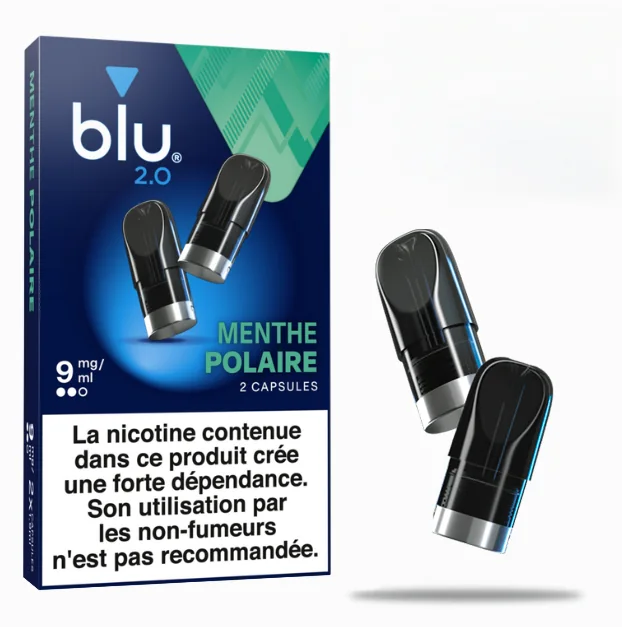
Every list of e-liquid flavours for beginners shares the same blind spot. They rank tastes without ever saying at what concentration those tastes were assessed, as though the two were unrelated.
They are not. The figure on the bottle decides how much of a flavour actually reaches you, because nicotine occupies part of the sensory space that the flavour is competing for. The same liquid can read as accomplished on one part of the scale and as an assault further up it, with nothing changed but a number.
This note takes the two together, which is the only way the question has an answer.
What nicotine does to taste
Nicotine is not an aroma. It contributes nothing to the flavour profile of a liquid, and yet it dominates how that profile is received.
What it produces is the throat hit, a contraction sensation on the way down. That sensation is loud, and loud things mask quiet ones. The finer notes of a flavour, the ones that give it definition rather than identity, are the first casualties.
The form of nicotine changes how loud it is. The unmodified freebase form produces a defined hit; the acidified salt form smooths it at an identical figure, which is why the same flavour can read as more detailed in one and blunter in the other. Our comparison of nic salts and freebase sets out why.
So a flavour verdict is never a verdict on the flavour alone. It is a verdict on a flavour, a figure and a form, all three at once.
The e-liquid flavours that survive the upper scale
A rule emerges from that mechanism, and it is more useful than any ranking. The higher up the scale, the more assertive a flavour has to be to remain legible at all.
Menthol and ice profiles are the most resilient of the lot. Cooling works through a different sensory channel than the throat hit does, so it keeps functioning where taste is being crowded out. That is precisely why British bar-style ranges are so heavily weighted towards iced variants.
Classic tobacco profiles hold up for a different reason. Their woody, roasted notes sit alongside a throat sensation rather than being drowned by it, and the combination reads as coherent instead of muddled.
Strong single fruits, a straight blackcurrant or a straight cherry, generally survive too, because their identity rests on one loud note rather than on an interplay between several quiet ones.
The e-liquid flavours that need the lower scale
At the other end, anything built on nuance disappears as soon as the hit rises, and this is where most disappointment comes from.
Complex fruit blends are the clearest example. A kiwi and passion fruit or a blueberry and raspberry depends on the tension between its components, and that tension is the first thing to go. What is left reads as a generic sweetness that could be almost anything.
Dessert and bakery profiles fare worse still. Custards, vanillas and pastry flavours rely on soft, rounded notes across a narrow range, and a strong hit flattens them into something that can tip from rich into cloying.
Citrus and herbal profiles sit in the same category. They are built on top notes, and top notes are exactly what a loud throat sensation removes.
None of this makes those e-liquid flavours poor choices. It makes them choices that only make sense in the lower part of the scale, where there is room for them to be heard.
What the British shelf actually offers
The market here is organised into two blocks that map almost exactly onto this divide, which makes it easier to navigate than it looks.
Bar-style salt ranges occupy one block. They come in 10 ml bottles, at the upper part of the scale up to the 20 mg/ml legal maximum, almost always on a balanced 50/50 base, and their flavour catalogues are dominated by iced fruit and sweet profiles built to be loud.
Shortfills occupy the other. Sold nicotine-free in larger bottles because anything containing nicotine is capped at 10 ml, they are high glycerine, made for higher power devices, and topped up with a small nicotine shot that usually lands the finished liquid low on the scale.
That structure means the shelf has already made a decision for you. The subtle flavour ranges live where the concentrations are low, and the loud ones live where the concentrations are high, because that is the only arrangement that works.
Recognising which block a bottle comes from tells you more about how it will taste than any review does.
The base ratio, quietly involved
There is a third variable inside all of this, and it moves at the same time as the other two without ever being announced.
Propylene glycol carries flavour compounds cleanly and sharpens definition; vegetable glycerine rounds them off and produces more vapour. Which of the two dominates is dictated largely by the coil in your device, not by preference.
So moving from a pod to a bigger tank changes the base, the concentration and often the form of nicotine in one step, and the resulting flavour verdict has three possible explanations. Our note on the PG/VG ratio and nicotine works through how to tell them apart.
The practical upshot is that a flavour tried once, in one setup, has not really been tried at all.
The mistake that costs the most
There is one habit that turns this whole subject into a series of wasted purchases, and it is easy to avoid.
Never change the flavour and the figure at the same time. If both move, the result is uninterpretable: a disappointing bottle might be the wrong flavour, the wrong concentration, or a perfectly good pairing of the two ruined by a change of base at the same moment.
Hold the figure steady while exploring flavours, or hold the flavour steady while adjusting the figure, and each result tells you something. Where the figure itself is the open question, our note on reading nicotine strength on the bottle covers how that number is built.
One variable at a time, and a workable combination emerges in a fortnight rather than over months.
Frequently asked questions
Why does the same flavour taste different at a higher figure?
Because the throat hit rises with the concentration, and a stronger hit masks the finer notes of a flavour without altering its composition. What changes is how much of the profile reaches you, not what is in the bottle.
Which flavour families cope best with the top of the scale?
Menthol and iced profiles, because cooling works through a separate sensory channel that the throat sensation does not crowd out. Classic tobacco profiles also hold up well, since their roasted notes sit alongside a strong hit rather than competing with it.
Which flavours are wasted at a high concentration?
Anything built on the interaction of several quiet notes: complex fruit blends, custards and bakery profiles, citrus and herbal blends. They rely on definition that a loud throat hit removes, so they read as generic rather than as themselves.
Do nic salts change how a flavour tastes?
Not by altering the aroma compounds, which are unrelated to the form of nicotine. They change the throat sensation, which is smoother in salt form at an identical figure, and a smoother hit leaves more room for the finer notes to be perceived.
Should a beginner start with tobacco flavours?
There is no obligation, and the honest answer is that it depends far more on where you sit on the concentration scale than on any general ranking of e-liquid flavours. Tobacco and menthol simply remain legible higher up it than delicate profiles do.
Judging a flavour and a figure together
An e-liquid flavour is never experienced on its own. It arrives wrapped in a throat sensation whose loudness is set by the concentration, the form of nicotine and the base carrying both, and every one of those alters what you actually taste.
That is why flavour rankings written without a figure attached are close to useless, and why two people can describe the same bottle in incompatible terms without either of them being wrong.
The workable approach is unglamorous. Note where you sit on the scale, choose e-liquid flavours whose construction survives at that point, and change one thing at a time when something disappoints. Read that way, taste stops being a lottery and becomes another reading you take yourself, bottle after bottle.
Editorial content for adult readers only. Nicotine is a highly addictive substance. Not for sale to anyone under 18 in the United Kingdom. Nothing here is a purchasing recommendation or a recommended nicotine strength.
Nicotine in a cigarette and the e-liquid comparison
How much nicotine in a cigarette, what is actually absorbed, and why the popular UK equivalence with mg/ml compares two units that do not meet.
Lire la note
Nicotine strength and the device that carries it
The same nicotine strength behaves differently in a pod and a sub-ohm tank. How draw, coil resistance and power decide what a label delivers.
Lire la note
Nicotine strength: reading the number on the bottle
What nicotine strength measures, how the UK scale is built, and the reasoning that lets you place a bottle without trusting a recommendation chart.
Lire la note